


Not your Aunt Peggy's Homemade Wine
Updated: May 20
Why Today’s Winemakers Are Leaving the Old Stereotypes Behind
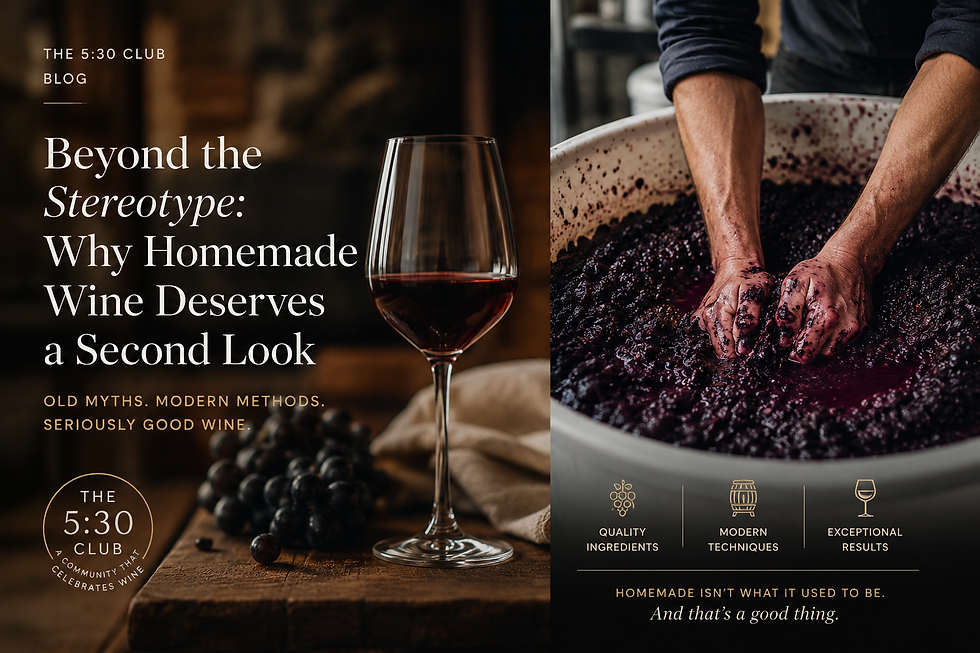
If the words “homemade wine” still make you think of dusty basement carboys, harsh reds in reused bottles, or something your uncle made in 1984 that tasted like vinegar and regret — you’re not alone.
For a long time, homemade wine carried a reputation it deserved.
But that version of winemaking is decades behind us.
Today’s wine enthusiasts have access to world-class grape varietals, precision equipment, professional-grade fermentation practices, and curated wine kits sourced from some of the best wine-growing regions in the world. The gap between commercial winery production and modern small-batch winemaking has never been smaller.
And the people making wine at home today?
They’re not trying to cut corners.
They’re chasing something more personal.
The Old Reputation Came From a Different Era
Forty years ago, homemade wine was often exactly what critics remember:
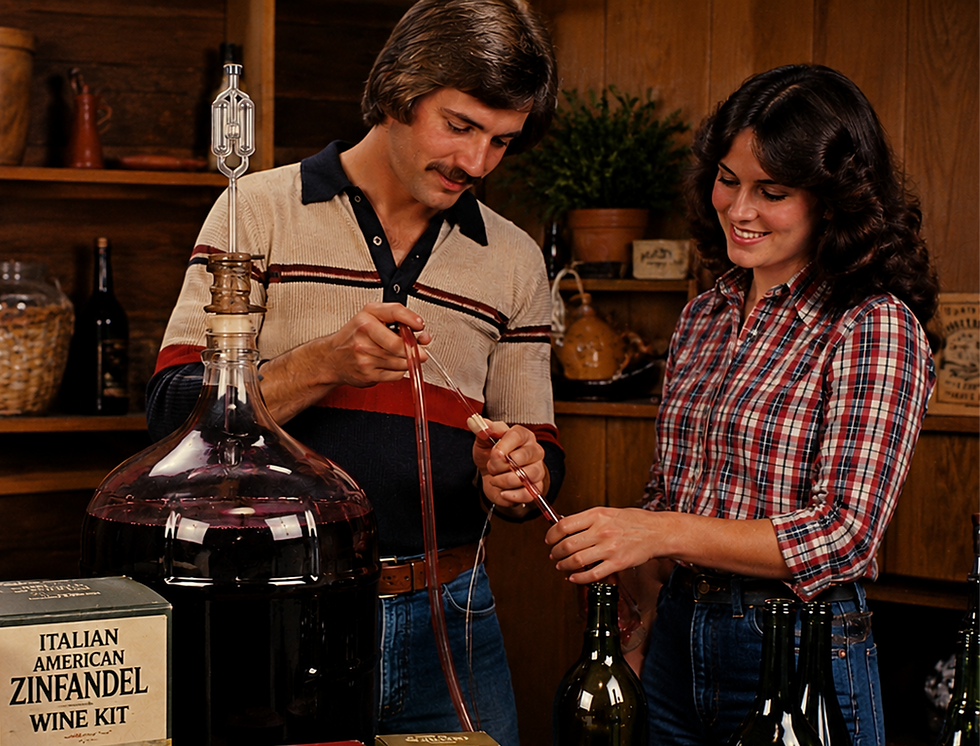
Inconsistent ingredients
Poor sanitation practices
Cheap concentrate
Little understanding of temperature control or aging
A “good enough” mentality
The result was unpredictable wine that too often leaned oxidized, overly sweet, or flat.
But modern winemaking has evolved dramatically.
Today’s premium wine kits are developed using professionally sourced juice and concentrates from renowned wine regions like California, Italy, Australia, Chile, and New Zealand. Fermentation science is more accessible than ever, and quality control has become central to the process.
The difference between 1980s homemade wine and modern craft winemaking is the same difference between instant coffee and a proper espresso bar.
Great Wine Starts With Great Ingredients

Ask any sommelier, winemaker, or collector what matters most in wine.
The answer is always the same: the fruit.
Modern winemaking kits focus heavily on varietal integrity and regional expression. That means you can produce wines that actually reflect the characteristics people expect from a bold Cabernet Sauvignon, a crisp Pinot Grigio, or a buttery Chardonnay.
Today’s premium kits aren’t designed to imitate wine.
They are wine.
The fermentation simply happens closer to home.
Wine Lovers Are Discovering the Joy of Participation
There’s also something traditional wine culture often overlooks:
Wine was never meant to be passive.
For most of history, communities made wine together. Families crushed grapes together. Neighbours shared vintages. Wine wasn’t simply purchased — it was part of life.
Modern small-batch winemaking brings some of that experience back.
It gives people a deeper connection to what’s in the glass.
You notice the aroma differently when you’ve watched the fermentation evolve. You appreciate structure and aging more when you’ve tasted the wine throughout the process. You become more curious about varietals, regions, tannins, oak, acidity, and balance.
Ironically, making wine often creates better wine drinkers.
The Best Part? You Control the Experience
Commercial wineries make wine for broad audiences.
When you make your own, you can shape it around your own taste:
Bigger reds
Cleaner whites
More oak
Less sweetness
Earlier drinking styles
Longer aging potential
You stop drinking what marketing departments tell you to like.
You start discovering what you actually enjoy.
The Conversation Around Wine Is Changing
There’s a new generation of wine enthusiasts emerging — people who care less about exclusivity and more about experience.
They still appreciate great wine.
They still value craftsmanship.
But they’re also interested in authenticity, creativity, and connection.
Making your own wine no longer sits outside wine culture.
Increasingly, it’s becoming part of it.
And once people taste what modern small-batch winemaking can actually produce, most old assumptions disappear pretty quickly.
The wine world has changed.
Maybe it’s time the stereotypes did too.
Comments